
Blog

15% Of Web Sales Donated to Boston Women's Fund
As a pioneer in ethical cacao sourcing with a commitment to economic justice, we are excited to launch a partnership with a wonderful, mission-aligned organization, the Boston Women’s Fund...
15% Of Web Sales Donated to Boston Women's Fund
As a pioneer in ethical cacao sourcing with a commitment to economic justice, we are excited to launch a partnership with a wonderful, mission-aligned organization, the Boston Women’s Fund...
Save 20% On Perfect Picnic Essentials!
What makes a perfect picnic? Delicious, healthy snacks & beverages and great friends! So we teamed up with our friends at Wildway, Joolies, Siren Snacks, and Grüvi to bring you...
Save 20% On Perfect Picnic Essentials!
What makes a perfect picnic? Delicious, healthy snacks & beverages and great friends! So we teamed up with our friends at Wildway, Joolies, Siren Snacks, and Grüvi to bring you...
15% Of Website Sales Will Be Donated to The One...
Just a few miles along the Mystic River from our Somerville, MA chocolate factory is the city of Chelsea. This vibrant community is home to neighbors, friends, and team members,...
15% Of Website Sales Will Be Donated to The One...
Just a few miles along the Mystic River from our Somerville, MA chocolate factory is the city of Chelsea. This vibrant community is home to neighbors, friends, and team members,...

A Chocolate Covered Summer Solstice
Summer is officially here (finally), with the Summer Solstice bringing the longest day of the year. In our hometown of Somerville, MA we’ll have over 15 hours of daylight, which...
A Chocolate Covered Summer Solstice
Summer is officially here (finally), with the Summer Solstice bringing the longest day of the year. In our hometown of Somerville, MA we’ll have over 15 hours of daylight, which...
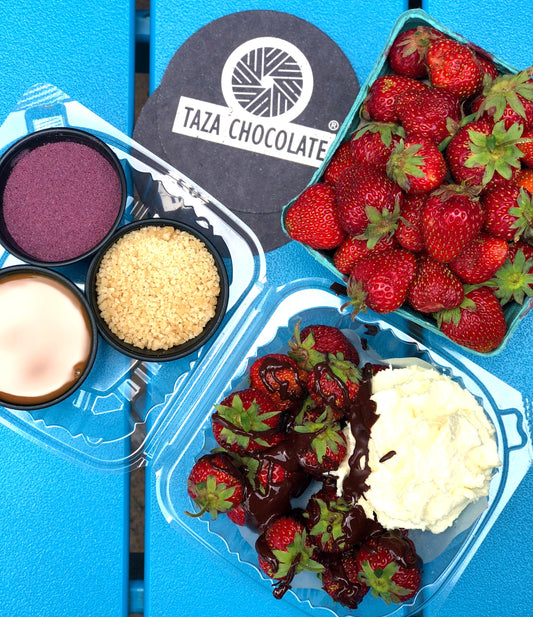
Taza Chocolate + Strawberries: I Dip, You Dip, ...
It's Officially Strawberry Season! Come over to the Taza Chocolate Bar at the Boston Public Market this Saturday, June 23 from 12-4 pm to spend your afternoon enjoying some fresh summer berries...
Taza Chocolate + Strawberries: I Dip, You Dip, ...
It's Officially Strawberry Season! Come over to the Taza Chocolate Bar at the Boston Public Market this Saturday, June 23 from 12-4 pm to spend your afternoon enjoying some fresh summer berries...

The Taza Chocolate Bar is Celebrating Pride in ...
June is National Pride Month and the Taza Chocolate Bar is celebrating in bold style! On Saturday, June 9th from 12 pm to 4 pm, stop by the Boston Public...
The Taza Chocolate Bar is Celebrating Pride in ...
June is National Pride Month and the Taza Chocolate Bar is celebrating in bold style! On Saturday, June 9th from 12 pm to 4 pm, stop by the Boston Public...
 Your Privacy Choices
